
Glucosamine for dogs: Support for healthy joints and increased mobility
Many dog owners are familiar with the problem: their four-legged friend is getting older, is less keen on moving, and may be showing the first signs of joint problems. Particularly in older dogs, large breeds, or dogs under high physical strain, this can lead to restricted joint function and even pain.
A proven and frequently recommended supplement for promoting mobility is glucosamine for dogs. This natural remedy can help keep your dog's joints healthy, protect the cartilage, and thus ensure greater mobility and a better quality of life.
In this article, you will learn everything you need to know about glucosamine, its use, the correct dosage, possible combinations with other active ingredients such as chondroitin and MSM, as well as the various products available for dogs (and other animals such as cats and horses).
What is glucosamine and why is it so important for dogs?
Glucosamine is a substance produced by the body that plays a central role in the formation and regeneration of cartilage tissue. It is a natural compound found in your four-legged friend's joint fluid and cartilage.
With advancing age or due to heavy strain, the body's own production of glucosamine sulfate decreases. This can lead to the cartilage regenerating more slowly and the joints no longer being optimally protected. The result: your darling can no longer move as freely, may show signs of pain, or avoids certain movements altogether. Their mobility changes and may be restricted.
Through the targeted administration of glucosamine, you can slow down this process and promote the maintenance of the cartilage structure. Especially in combination with chondroitin sulfate, MSM (methylsulfonylmethane), and vitamin C, glucosamine can help support joint health and improve pain relief.
How does glucosamine work in dogs?
The effectiveness of glucosamine is based on several mechanisms:
Supporting cartilage formation
Cartilage is an important component of the joints and serves as a kind of "shock absorber" that protects the bones from wear and tear. Glucosamine is an essential building block of this cartilage tissue and plays a central role in its renewal and regeneration.
With increasing age or high strain—for example through sports, jumping, or long periods of running—cartilage can break down and regenerate less effectively. This often leads to pain and restricted mobility. The regular administration of glucosamine sulfate can contribute to the body continuing to produce sufficient cartilage tissue, thereby ensuring the maintenance of joint function.
Promoting joint lubrication
Joint fluid (synovial fluid) is essential for smooth movement. It serves as a kind of lubricant that minimizes friction between the joint surfaces while simultaneously supplying the cartilage with nutrients.
If the production of this fluid decreases, it can lead to a "dry" joint environment, which increases the risk of inflammation and pain. Glucosamine can help to promote the formation of joint lubricant and thus enable better mobility.
Especially in older dogs whose joint function is already restricted, an improvement in joint lubrication can provide significant benefits.
Protection against cartilage breakdown
In addition to supporting cartilage formation, glucosamine also helps to protect existing cartilage and slow down its breakdown. This protective mechanism is particularly important for four-legged friends who already suffer from joint problems or who have an increased risk of joint disease due to their breed, age, or genetic predisposition.
Chondroitin sulfate, another important component of many joint supplements, works in combination with glucosamine to slow down cartilage degradation and stabilize its structure. While glucosamine promotes the production of new cartilage cells, chondroitin sulfate contributes to keeping the cartilage resilient and less susceptible to wear and tear.
In addition, MSM (methylsulfonylmethane) can often have a supportive effect, as it possesses anti-inflammatory properties and improves cellular metabolism in the cartilage.
Anti-inflammatory effect
Many dog owners report that their four-legged friends seem significantly less stiff after taking glucosamine and move with more joy again. This is partly because glucosamine has anti-inflammatory properties and can therefore contribute to pain relief.
When cartilage is damaged or joint fluid decreases, it often leads to inflammation in the joints. This results in swelling, pain, and reduced mobility. By administering glucosamine sulfate, the body can better manage such inflammatory reactions and alleviate the symptoms.
Which four-legged friends benefit most from glucosamine?
Glucosamine can be beneficial for all dogs, but especially for:
-
Older dogs, who experience declining joint function over time.
-
Large breeds, as they have a higher load on their joints due to their weight.
-
Sporty, active dogs, who suffer from signs of cartilage wear faster due to high activity levels.
-
Dogs with joint diseases such as osteoarthritis, hip dysplasia, or elbow dysplasia.
However, it is not just dogs that benefit from glucosamine—cats and horses can also achieve improved joint health through the additional intake of glucosamine.

What glucosamine products are available?
Glucosamine is available in various compositions, which can be selected based on your dog's preferences. Here are the most common forms of administration:
-
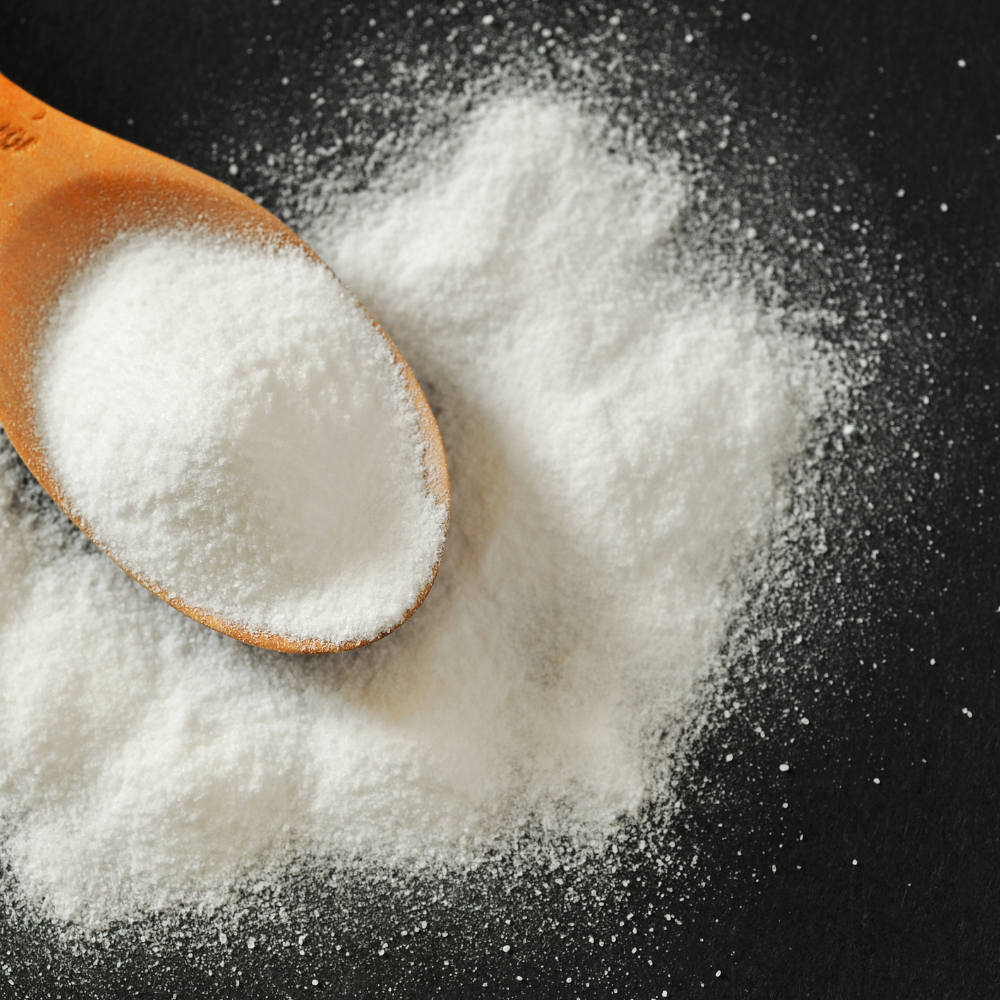
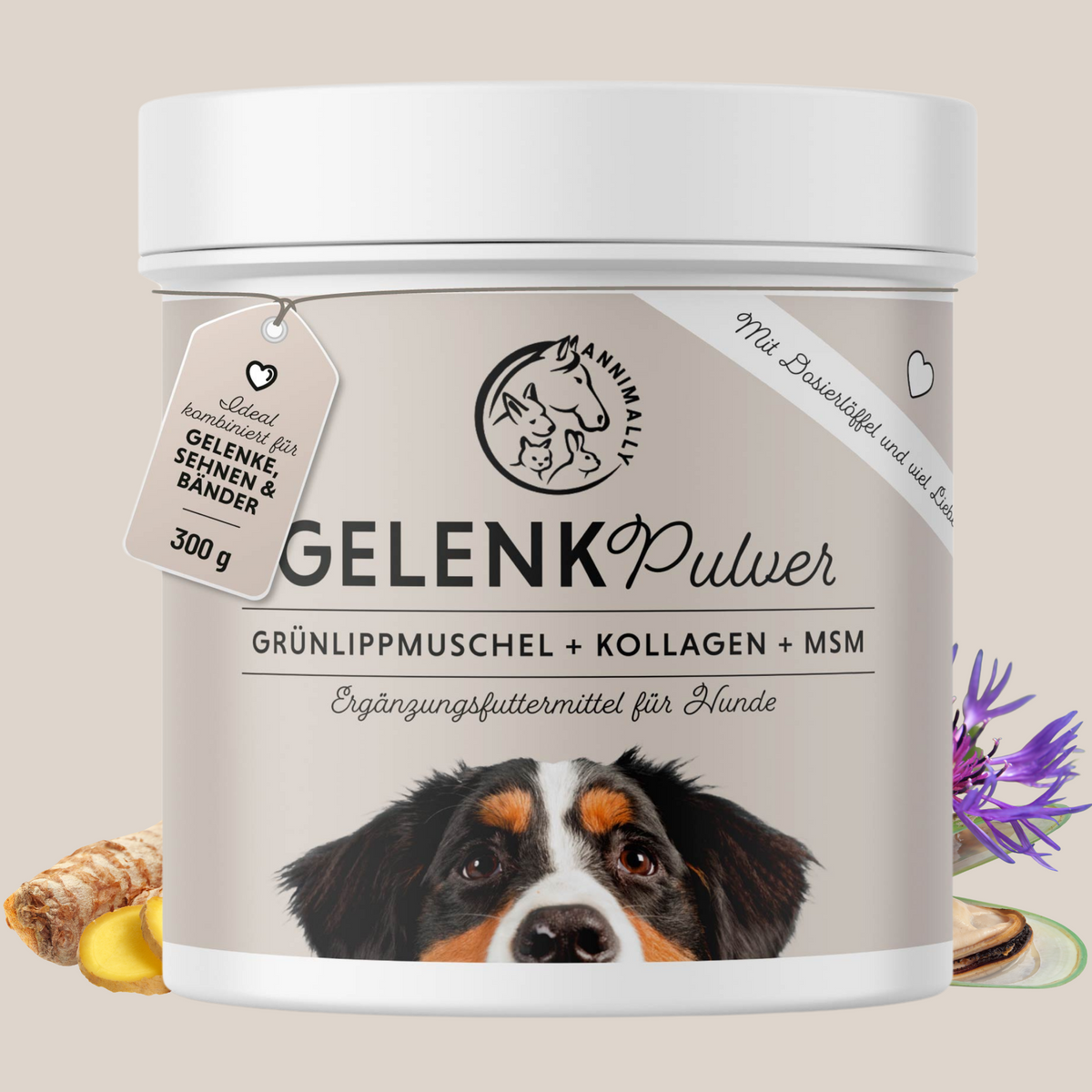
Powder: Glucosamine as a powder is easy to mix into food and easy to dose.
-
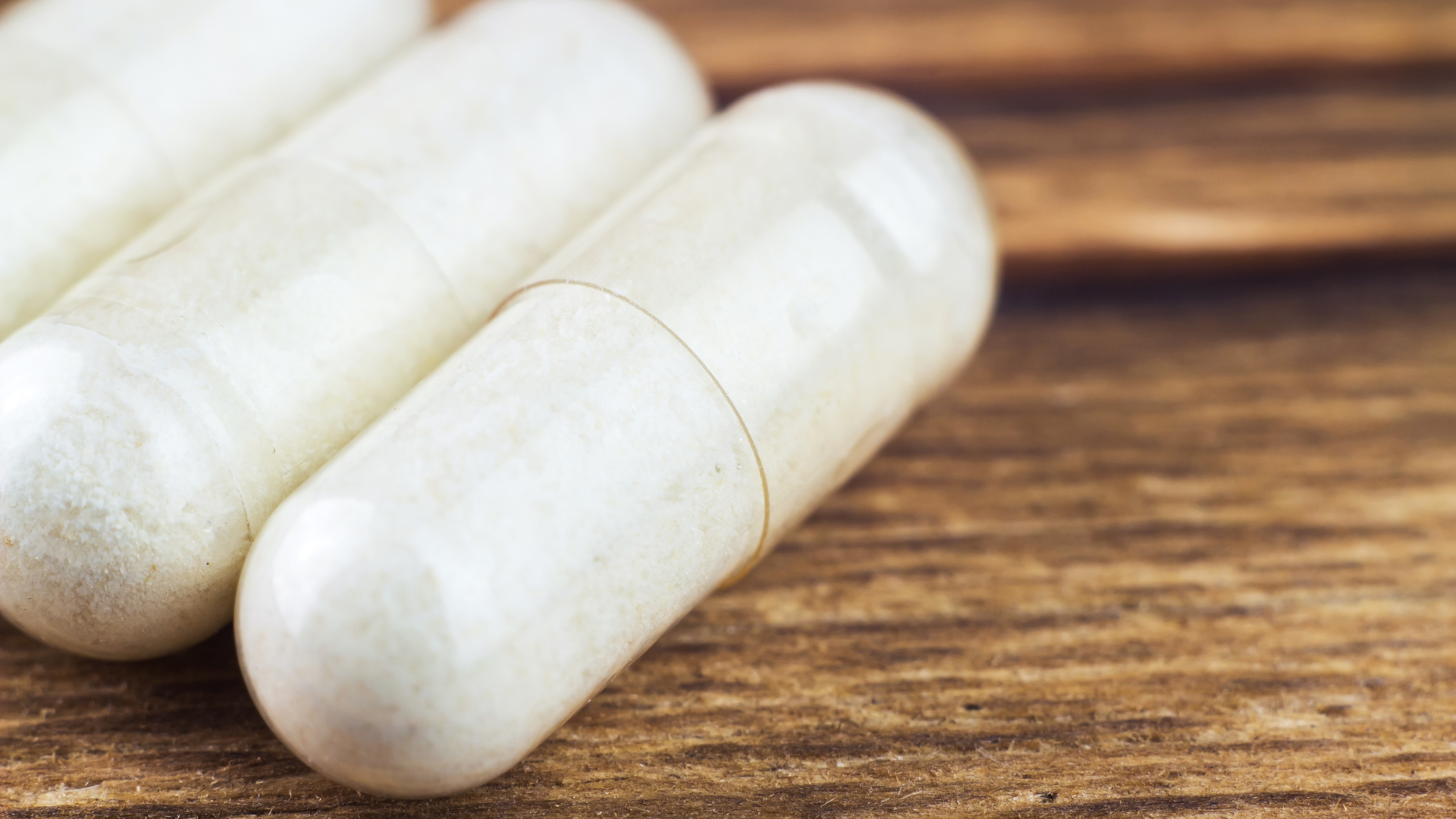
Capsules: Practical for precise dosing, though not all dogs like to swallow them.
-
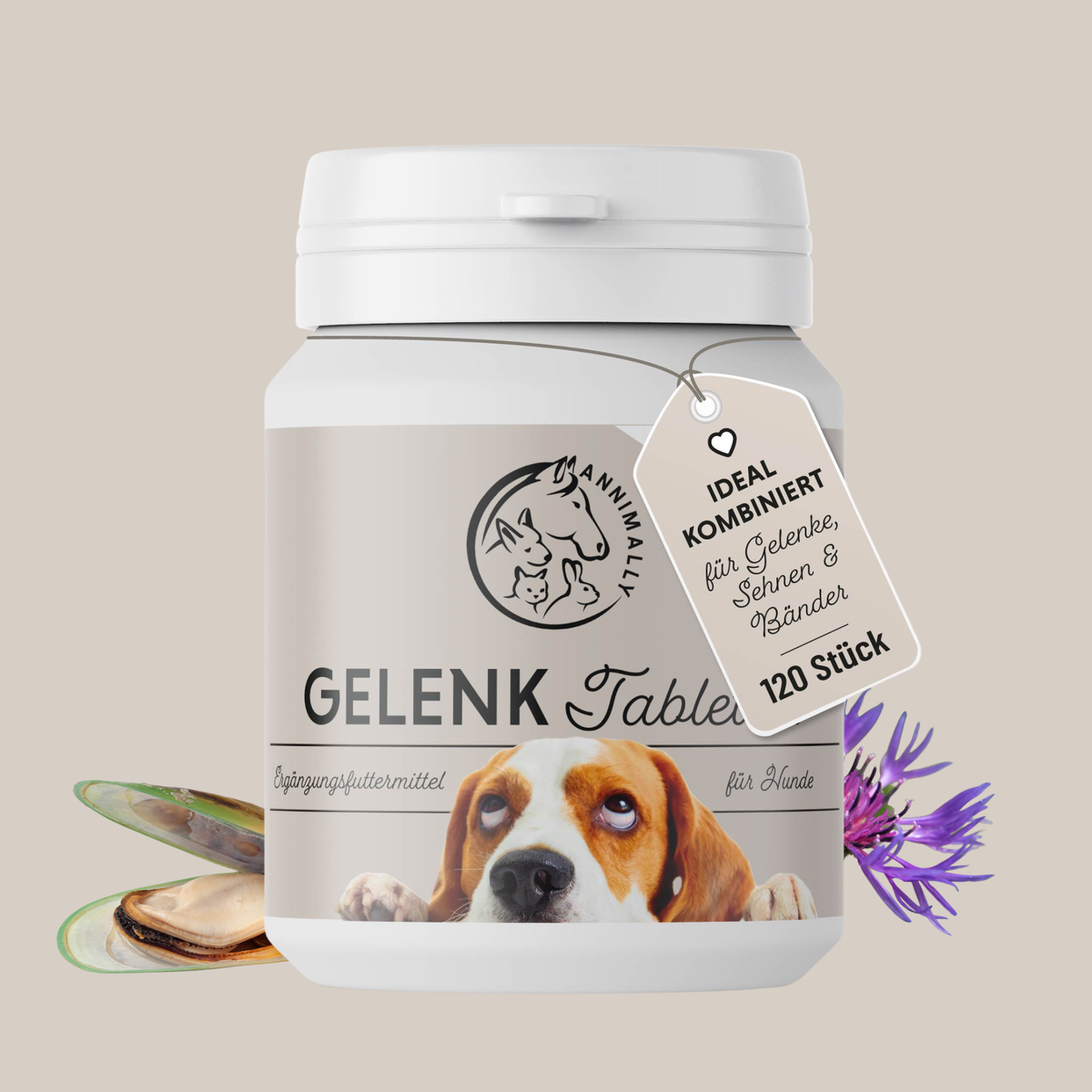
Tablets or chewable treats: A popular form, as they are often offered as treats.
-
Liquid: Can be easily mixed into food, ideal for dogs that avoid tablets.
Make sure that the quality and contents of the products are high and that they contain no unnecessary additives.
Dosage and application of glucosamine for dogs
The amount your dog requires depends on their size and state of health. A general recommendation is:
-
Small dogs (up to 10 kg): approx. 250 mg per day
-
Medium-sized dogs (10–25 kg): approx. 500 mg per day
-
Large dogs (25–40 kg): approx. 750 mg per day
-
Very large dogs (over 40 kg): up to 1,000 mg per day
It is advisable to coordinate the exact dosage with a veterinarian in order to achieve the best possible results.

When will the first results be visible?
The effects of glucosamine do not appear immediately. As a rule, it takes a few weeks until an improvement in movement and joint function becomes apparent. Many dog owners report noticing a positive change after about 4–6 weeks.
Long-term administration is recommended to ensure the preservation of joint health and to enable optimal pain relief.
Conclusion: Glucosamine for better joint health in dogs
If you would like to support your dog's joints, glucosamine is a sensible supplement. Whether as a powder, in capsules, or in combination with chondroitin sulfate and MSM—high-quality products can contribute to your dog being able to move pain-free again.
Older dogs and those with joint problems in particular can benefit from glucosamine. However, taking it preventively can also be sensible to maintain joint function in the long term.
Talk to your veterinarian to find the right composition and dosage for your dog. With the right support, you can enable your four-legged friend to have more mobility, joy in movement, and an improved quality of life!